Rabu, 06 November 2019

Acclaimed novelist Ernest Gaines dies at 86 - The Associated Press

NEW ORLEANS (AP) — Novelist Ernest J. Gaines, whose poor childhood on a small Louisiana plantation germinated stories of black struggles that grew into universal tales of grace and beauty, has died. He was 86.

The Baton Rouge Area Foundation, which sponsors a literary award in Gaines’ honor, confirmed he died Tuesday in his sleep of cardiac arrest at his home in Oscar, Louisiana.

“Ernest Gaines was a Louisiana treasure,” foundation president and CEO John Davies said in a statement. “He will be remembered for his powerful prose that placed the reader directly into the story of the old South, as only he could describe it. We have lost a giant and a friend.”

Louisiana Gov. John Bel Edwards said in a statement that Gaines “used his immense vision and literary talents to tell the stories of African Americans in the South. We are all blessed that Ernest left words and stories that will continue to inspire many generations to come.”

“A Lesson Before Dying,” published in 1993, was an acclaimed classic. Gaines was awarded a “genius grant” that year by the MacArthur Foundation, receiving $335,000.

Both “The Autobiography of Miss Jane Pittman” (1971) and “A Gathering of Old Men” (1984) became honored television movies.

The author of eight books, Gaines was born on a plantation in Pointe Coupee Parish. His first writing experience was writing letters for illiterate workers who asked him to embellish their news to far-off relatives. Bayonne, the setting for Gaines’ fiction, was actually New Roads, Louisiana, which Gaines left for California when he was 15.

Although books were denied him throughout his childhood because of Louisiana’s strict segregation, which extended even to libraries, he found the life surrounding him rich enough to recollect in story after story through exact and vivid detail.

In “A Lesson Before Dying,” for example, the central figure is the teacher at the plantation school outside town. Through the teacher, whose profession Gaines elevates to a calling, the novelist explores the consistent themes of his work: sacrifice and duty, the obligation to others, the qualities of loving, the nature of courage.

Gaines found that using his storytelling gifts meant more than militant civil rights action. “When Bull Connor would sic the dogs, I thought, ‘Hell, write a better paragraph.’

“In 1968, when I was writing ‘The Autobiography of Miss Jane Pittman,’ my friends said, ‘Why write about a 110-year-old lady when all of this is going on now?’ And I said, ‘I think she’s going to have something to say about it.’”

What Gaines’ characters said about it achieved a power and timelessness that made him a distinctive voice in American literature. Much of the appeal of his books is their seeming simplicity and straightforward story line. “I can never write big novels,” he always maintained. But the questions he explored were the eternal ones great writers confront: what it means to be human, what a human lives and dies for.

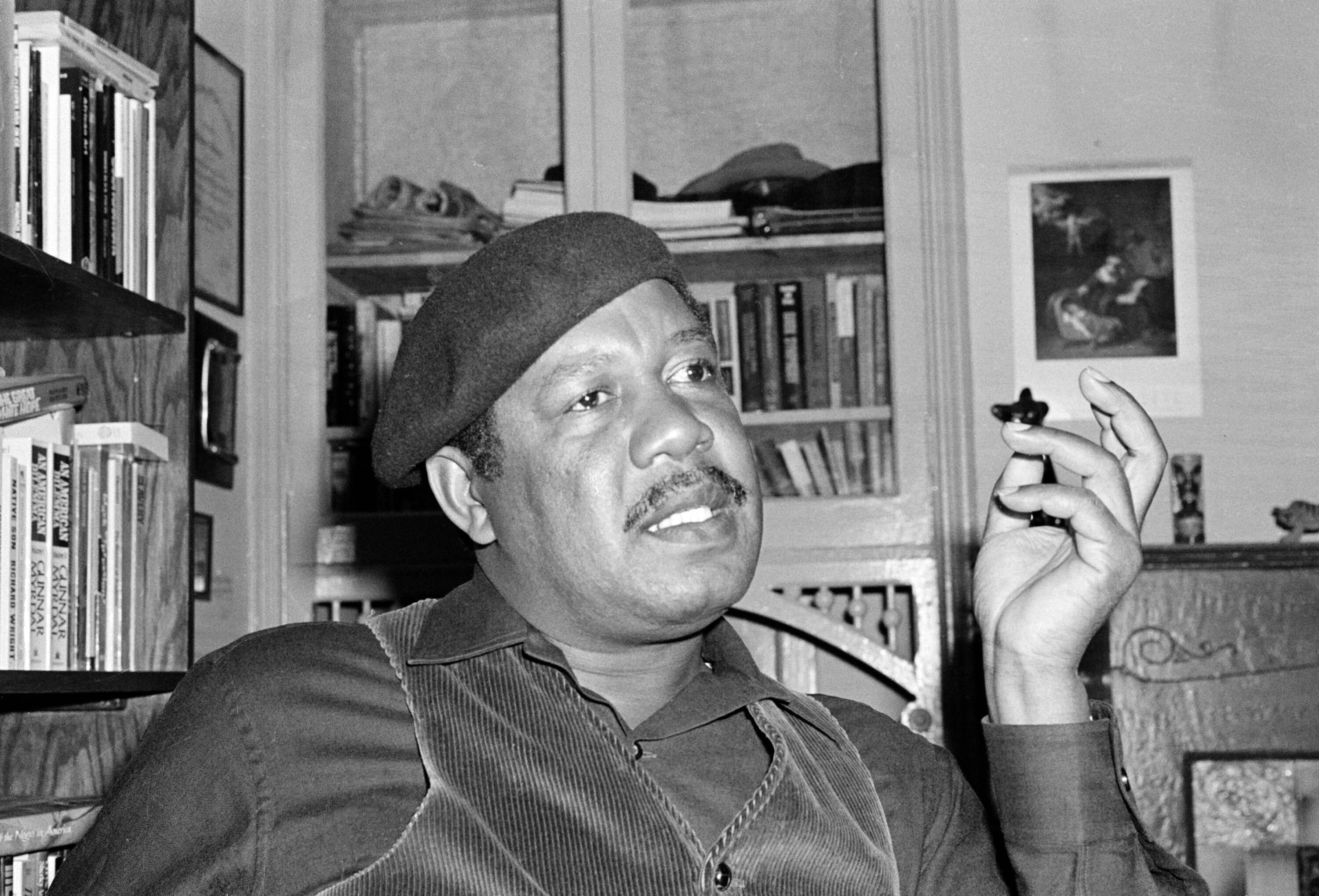
A large, gentlemanly man with a certain bohemian air — braces and berets were favorite attire — and a stately manner, Gaines was devoted to friends and family. When he married in 1993 at age 60, he celebrated in Lafayette, New Orleans, Miami, and San Francisco, so the gatherings could include his intimates. Dianne Saulney Gaines is an assistant district attorney for Dade County, Florida. The couple divided their time among various abodes but spent the MacArthur money on a year in France and other travels.

Gaines spent the fall teaching creative writing at the then-University of Southwestern Louisiana in Lafayette (now University of Louisiana at Lafayette) since 1983. It’s only about an hour’s drive from his childhood home.

He could not write and teach at the same time. He needed five or six hours each day devoted to writing and “I can’t write a couple of days and skip two or three days.”

“A Lesson Before Dying” took seven years.

“I work five days a week, just like a regular job. I get up in the morning, do a little exercise, eat a little breakfast. I’m at my desk by nine in the morning, work until three with a little break for lunch,” he said.

His literary influences were eclectic. Since he got a late start as a reader, he read with a vengeance.

“I discovered John Steinbeck ... then Willa Cather ... then the great 19th Century Russian and French writers, writers like DeMaupassant and Flaubert. Then I discovered Ivan Turgenyev, the great Russian classicist. He wrote small novels where everyone wrote big novels. ... (Turgenyev’s) ‘Fathers and Sons’ was one of my favorite books when I was a young man. It was my Bible when I was writing my first novel, ‘Catherine Carmier’ (1964),” he said.

Other books include “Of Love and Dust” (1967), “Bloodline” (1968), “A Long Day in November” (1971), and “In My Father’s House” (1978).

Among his numerous awards, Gaines received prestigious grants from the National Endowment for the Arts and the Rockefeller and Guggenheim Foundations. He held honorary doctorates from five colleges and universities.

The Ernest Gaines Award for Literary Excellence will continue as his legacy. It will be presented Jan. 30 to a rising African American author.

___

Former Associated Press writer Cain Burdeau prepared material for this story.

Let's block ads! (Why?)


https://apnews.com/e9fe833a0686427eaa6cf3cc768d264d

2019-11-06 08:53:40Z
CAIiEMMIjz7B34uU4d58pSuhe6AqFwgEKg8IACoHCAowhO7OATDh9CgwruxQ

Selasa, 05 November 2019

Angelina Jolie talks life after Brad Pitt divorce: 'I have both the visible and invisible scars' - Fox News

Angelina Jolie is speaking out about how her divorce from Brad Pitt in 2016 drastically affected her life.

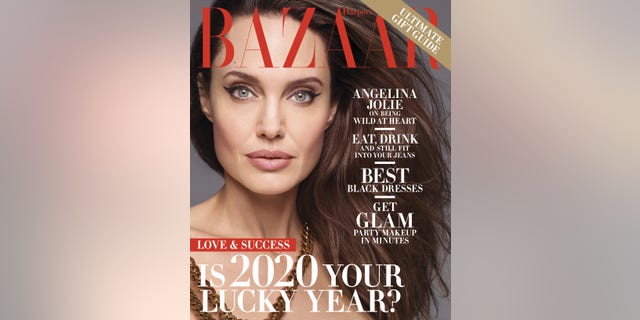
The Oscar winner, 44, spoke to Harper's Bazaar magazine in a candid interview about how the last four years have been physically, emotionally and mentally turbulent for her and her six children.

“My body has been through a lot over the past decade, particularly the past four years, and I have both the visible and invisible scars to show for it,” Jolie said.

BRAD PITT ON ANGELINA JOLIE DIVORCE: 'I HAD TO UNDERSTAND MY OWN CULPABILITY'

“The invisible ones are harder to wrestle with. Life takes many turns. Sometimes you get hurt, you see those you love in pain, and you can’t be as free and open as your spirit desires. It’s not new or old, but I do feel the blood returning to my body," she added.

Angelina Jolie covers Harper’s Bazaar’s December/January issue

Angelina Jolie covers Harper’s Bazaar’s December/January issue (Sølve Sundsbø)

Besides her marriage ending on the public stage, Jolie underwent a preventative double mastectomy in 2013 followed by breast reconstruction after testing positive for the BRCA gene. In 2015, the actress also had her ovaries and fallopian tubes removed.

Jolie admitted it has taken a while for her to feel like her old self. “The part of us that is free, wild, open, curious can get shut down by life. By pain or by harm,” she said.

WHAT REALLY TORE BRAD PITT AND ANGELINA JOLIE APART?

But her kids – Maddox, Zahara, Pax, Shiloh, Vivienne, and Knox Jolie-Pitt – have helped Jolie rediscover her "true self ... they have helped me to find it again and to embrace it."

"They have been through a lot. I learn from their strength. As parents, we encourage our kids to embrace all that they are, and all that they know in their hearts to be right, and they look back at us and want the same for us," she explained.

(Sølve Sundsbø)

She later insinuated that her co-parenting arrangement with Pitt has limited her freedom. “I would love to live abroad and will do so as soon as my children are 18,” she admitted. “Right now I’m having to base where their father chooses to live."

But regardless, the "Maleficent" star is hopeful about the new year. "My dream for everyone in 2020 is to remember who they are and to be who they are regardless of what might be disrupting their ability to be free. If you feel you are not living your life fully, try to identify what it is or who it is that is blocking you from breathing," she said.

MADDOX JOLIE-PITT SPEAKS OUT ON ALLEGED ESTRANGEMENT FROM BRAD PITT

"Identify and fight past whatever is oppressing you. That takes many forms, and it is going to be a different fight for everyone," I say this with a deep understanding that for so many women, freedom is simply not an option. Their own system, community, family, government works against them and is part of what is shutting them down.”

Let's block ads! (Why?)


https://www.foxnews.com/entertainment/angelina-jolie-brad-pitt-divorce-kids

2019-11-05 19:35:56Z
52780427815707

The Pros and Cons of the De-aging Effects in ‘The Irishman’ - The Ringer

When it comes to the discourse around The Irishman, the exhausting and seemingly never-ending debate surrounding Martin Scorsese and Marvel has distracted us from the things that really matter about this film: Al Pacino’s working with Scorsese for (somehow) the first time in his career; the great Joe Pesci’s coming out of retirement; and, of course, the movie’s highly publicized, highly expensive foray into de-aging VFX. Because The Irishman spans decades, following hitman Frank Sheeran from his service in World War II to his time with the mob and Jimmy Hoffa in the subsequent decades—the film’s framing device is an older Sheeran reminiscing about his life from a retirement home—and because the film’s leading actors are in their 70s, having capable de-aging tech was an essential component of the project. (Sure, Scorsese could’ve used young actors or something, but seeing living legends like Robert De Niro, Pacino, and Pesci share the screen again is a huge part of the movie’s appeal.)

But The Irishman’s de-aging VFX also ran the risk of being the film’s biggest problem. Since so much of the movie takes place in the past with “younger” versions of the characters, unconvincing de-aging technology could be a huge distraction from the actual storytelling. The film’s trailers and production stills didn’t inspire much confidence; World War II–era De Niro looked like he came straight from a mid-2000s video game and was gloriously memed into oblivion.

Where The Irishman’s de-aging landed on the spectrum from Samuel L. Jackson’s surprisingly convincing Young Nick Fury in Captain Marvel to the hauntingly soulless expressions of Evil Jeff Bridges in Tron: Legacy was always going to be important for the film. With de-aging effects already being used to varying degrees in Gemini Man, Terminator: Dark Fate, Captain Marvel, and It: Chapter 2, 2019 has been a watershed year for using the technology onscreen. (Most of the effects have been surprisingly fine—or at the very least, doesn’t distract from the viewing experience.)

On the whole, The Irishman’s de-aging isn’t exactly flawless, but it manages not to ruin an otherwise-great Martin Scorsese film. Though, having seen the movie in a theater, I’m curious whether audiences will find the effects better or worse watching it at home—this is how most people will see the film—where it’ll be available on Netflix beginning November 27. Having spent more than three hours with my De-aged Italian/Irish Sons, these are the biggest pros and cons you should take into consideration before seeing The Irishman for yourself.

Pro: It’s Way Better Than Most De-Aging Efforts

While The Irishman was something Scorsese had hoped to make for years, the director wanted to be sure the de-aging tech was up to the task first. In 2015, he tested the aptitude of de-aging visual effects by having De Niro re-create a scene from Goodfellas; it was good enough that The Irishman went into production two years later. Four years isn’t a long time, but when it comes to using visual effects to de-age and/or re-create someone’s likeness—remember the bizarre and ethically dubious use of CGI Peter Cushing from Rogue One in 2016?—it might as well be a lifetime.

Pacino and Pesci’s de-aging stand out as the most effective in the film—for the former, it especially helps that Jimmy Hoffa was in his 60s by the time he mysteriously disappeared. As for Pesci, if we were all willing to accept that he was playing someone in his late 20s in Goodfellas—Pesci was 46 at the time and won a much-deserved Oscar for the performance—I think we can handle 76-year-old Pesci playing someone decades younger yet again.

Con: The De-Aging Effect Is Still Uncanny and Takes Time to Get Used To

Where The Irishman’s de-aging occasionally stumbles is, unfortunately, with its lead. De Niro, as Sheeran, looks nowhere near as bad as the trailers and production stills would make him out to be, but there’s a certain sheen to De Niro’s de-aged face. (The brief World War II moments were, predictably, the worst of the bunch; de-aged De Niro did not look anything like a person in his 20s.) Not helping matters is the fact that De Niro gives a rather subdued performance. Sheeran spends good portions of the film being a quiet observer to mob/union chaos, and De Niro’s de-aged face looks weirder when it isn’t moving as much.

But perhaps worst of all, Pesci’s mob boss Russell Bufalino repeatedly refers to Sheeran as “kid,” a statement so off-putting it’s genuinely distracting the first couple of times it happened. Pesci and De Niro are the same age in real life, and that extended to the de-aging effects for both of their characters. There’s never a point when you’re convinced that Pesci is playing someone who’s Sheeran’s senior, or that anyone who isn’t an old man in a wheelchair should be calling De Niro “kid.”

Pro: It Lets the Best Actors on the Planet Cook

The effectiveness of The Irishman’s VFX could set a strange precedent, where older, popular actors become de-aged for younger roles. (Upon getting a de-aged makeover, De Niro reportedly told effects supervisor Pablo Helman: “You just gave me 30 more years of my career.”) On the one hand, the development of de-aging VFX would allow a veteran actor to expand their range—Will Smith did a great job tweaking his affects to play a “younger” him in Gemini Man—but it might come at the expense of opportunities for younger actors who could play the part themselves. Like, imagine if this technology existed when The Godfather: Part II came out—it would be dope to see what a de-aged Marlon Brando would have been able to do, but playing a younger Vito Corleone remains one of the most iconic and celebrated performances of De Niro’s superlative career.

And yet The Irishman feels like a special exception—if only because of what the project signifies. De Niro, Pacino, and Pesci are practically synonymous with gangster epics; Scorsese’s getting the gang back together for [Dominic Torretto voice] one last ride is a thrilling, momentous event. When the de-aging technology allows you to let some of the best actors on the planet cook, you might as well let them while we can still appreciate their talents.

Con: The Actors’ Performances Are Occasionally Hindered

It’s one thing to have an actor’s face and body convincingly de-aged; it’s another to feel convinced someone is moving around like a younger person. That’s an occasional issue in The Irishman that Scorsese had to deal with (and that you will probably notice it a little for yourself). The filmmaker told Sight & Sound magazine that they had to digitally alter De Niro’s mouth so that he could “convey a kind of vulnerability and a haplessness.” According to Scorsese, the actor couldn’t pull the look off without seeming “threatening.” (Although, LOL, when, at any age, has Robert De Niro not looked intimidating?)

They also needed to reshoot a scene of Pacino-as-Hoffa getting out of his chair because, essentially, it didn’t look like he was getting up “like a 49-year-old.” (Scorsese joked they got Pacino down to a “62” on the second take, which is the biggest burn the actor’s suffered since the release of Jack and Jill.) No amount of technological advancements in de-aging can replace someone moving and feeling like they’re younger; extended de-aged performances that require some level of physicality will always look slightly off. When Sheeran assaults a grocery store clerk who hit his young daughter, I never got the impression he was throwing around his weight like a young man—but at the same time, I didn’t really mind since it’s still really compelling to watch an angry Robert De Niro curb-stomp someone’s hand. (If Rotten Tomatoes tries to label this as an Irishman review, please use the above sentence as a pull quote.)

The good of The Irishman’s de-aging VFX more than outweighs the bad, and while Hollywood probably won’t rush to incorporate the tech in every movie starting tomorrow, it still represents a major turning point. Ang Lee used high-frame-rate filmmaking in Gemini Man, and believes that the innovation will be the future of cinema. The future of filmmaking may indeed lie in a creative decision from Gemini Man, but not in the way Lee thought.

Let's block ads! (Why?)


https://www.theringer.com/movies/2019/11/5/20948617/the-irishman-aging-tech-martin-scorcese-robert-de-niro

2019-11-05 10:40:00Z
CBMiamh0dHBzOi8vd3d3LnRoZXJpbmdlci5jb20vbW92aWVzLzIwMTkvMTEvNS8yMDk0ODYxNy90aGUtaXJpc2htYW4tYWdpbmctdGVjaC1tYXJ0aW4tc2NvcmNlc2Utcm9iZXJ0LWRlLW5pcm_SAXdodHRwczovL3d3dy50aGVyaW5nZXIuY29tL3BsYXRmb3JtL2FtcC9tb3ZpZXMvMjAxOS8xMS81LzIwOTQ4NjE3L3RoZS1pcmlzaG1hbi1hZ2luZy10ZWNoLW1hcnRpbi1zY29yY2VzZS1yb2JlcnQtZGUtbmlybw

Emma Watson says she's 'self-partnered' not single - CNN

Watson, 29, who rose to fame as Hermione Granger in the Harry Potter films, coined the phrase in an interview with British Vogue in which she discussed the pressures of turning 30.
The actor and activist, whose birthday is in April, said she initially did not understand the "fuss" that surrounded the milestone.
Emma Watson honors woman whose death changed Ireland's abortion laws
More recently, however, she admitted feeling "stressed and anxious" about her upcoming birthday.
She told British Vogue: "If you have not built a home, if you do not have a husband, if you do not have a baby, and you are turning 30, and you're not in some incredibly secure, stable place in your career, or you're still figuring things out... There's just this incredible amount of anxiety."
Speaking of how she had never believed the "'I'm happy single' spiel," she added: "It took me a long time, but I'm very happy [being single]. I call it being self-partnered."
The new phrase is reminiscent of actor Gwyneth Paltrow's use of the term "conscious uncoupling" to describe her divorce proceedings from the Coldplay singer Chris Martin in 2014.
Gwyneth Paltrow wanted to reinvent divorce with her 'conscious uncoupling'
Later this year, Watson will return to the screen playing Margaret "Meg" March in "Little Women" alongside Laura Dern and Meryl Streep -- both of whom she knew previously through their activism.
The full interview will appear in the December issue of British Vogue and will be available from November 8.

Let's block ads! (Why?)


https://www.cnn.com/2019/11/05/entertainment/emma-watson-self-partnered-scli-intl/index.html

2019-11-05 11:40:00Z
52780427418469

Martin Scorsese Explains What He Was Trying to Say About Marvel Movies - Slate

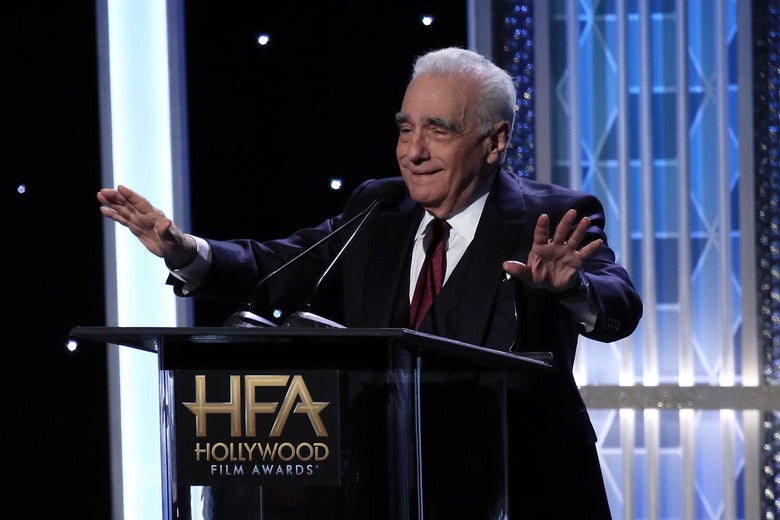
Martin Scorsese makes a "calm down" gesture behind a podium at an awards show.

Hold on, let me explain!

David Livingston/Getty Images

Since early October, the film world has been arguing about Martin Scorsese’s thoughts on Marvel movies, based on a brief answer he gave in an Empire magazine interview in which he compared the films to theme parks said he did not consider them cinema. The discussion had a certain amount of Kremlinology to it: Scorsese only said a few words on the matter, leaving more room for projection than a movie palace, and so a lot of different issues were being conflated in the responses from both Scorsese’s New Hollywood peers and Marvel fans and filmmakers. On Monday, Scorsese published an op-ed in the New York Times hashing out exactly what he was trying to say. It’s a beautifully written, melancholy look at the state of the industry, and although it’s unlikely to change many minds, it should reduce the number of people talking past each other. Read it, read it, read it.

Advertisement

It’s a generous essay in one sense: Scorsese goes out of his way to acknowledge that taste isn’t subject to dispute, going so far as to say that if he had been born later, he could imagine enjoying Marvel movies. He also interrogates his own taste as a young man, acknowledging that some of his favorite films—Alfred Hitchcock’s in particular—promised and delivered some of the same theme park thrills Marvel traffics in. But he thinks Marvel is different, and he shows his work, proceeding backwards from “I do not enjoy watching these movies” to the industrial processes that produced them.

Many of the elements that define cinema as I know it are there in Marvel pictures. What’s not there is revelation, mystery or genuine emotional danger. Nothing is at risk. The pictures are made to satisfy a specific set of demands, and they are designed as variations on a finite number of themes.

They are sequels in name but they are remakes in spirit, and everything in them is officially sanctioned because it can’t really be any other way. That’s the nature of modern film franchises: market-researched, audience-tested, vetted, modified, revetted and remodified until they’re ready for consumption.

Revelation, mystery, and genuine emotional danger are where you find them, but it’s hard to argue with the way Scorsese characterizes Marvel movies as business ventures built-to-order for a specific purpose. You could say the same thing about the overwhelming majority of Hollywood product, but Scorsese also explains why he isn’t just letting people like things: The scale and cost of a Marvel film requires it to play on as many screens as possible, there are a finite number of movie theaters, and the resulting crush is relegating other types of movies—the ones Scorsese likes to watch and make, for instance—to streaming and home video. That is a real thing that is happening, it is distinct from “I don’t like watching superhero movies,” and it’s something we should be able to talk about without getting into an argument about whether there’s a line between “worldwide audiovisual entertainment” and “cinema,” and if so, where to draw it. (It’s also distinct from “I wanted The Irishman to play in more theaters,” as he explains.) To be clear, Scorsese isn’t backing down from the argument part of this, and this gets Disney dead to rights, given the way they’re locking down the Fox library:

… there are some in the business with absolute indifference to the very question of art and an attitude toward the history of cinema that is both dismissive and proprietary—a lethal combination. 

Advertisement

The debate over whether or not Hollywood studios are making good movies at the moment has been raging since 1911, and it’s not going to end any time soon. But going forward, at least we have some clarity about what Scorsese thinks about Marvel movies.

Let's block ads! (Why?)


https://slate.com/culture/2019/11/martin-scorsese-on-marvel-mcu-new-york-times-op-ed-not-cinema.amp

2019-11-05 06:49:00Z
CAIiEI-Qp01xgSpelCgYGvYXAuwqFggEKg0IACoGCAowuLUIMNFnMMyu7QU

Alexandra Grant: 5 Things To Know About Keanu Reeves’ Girlfriend After Their Red Carpet Debut - Hollybaby

Alexandra Grant was Keanu Reeves’ first ever (romantic) date on a red carpet, 35 years after launching his career! Here’s what you should know about the renown artist whose work relationship with Keanu blossomed into something more.

Alexandra Grant’s love story with Keanu Reeves, 55, is a beautiful one. The 46-year-old artist’s fateful meeting with the John Wick star at a dinner party in 2009 led to nearly a decade of work collaborations, a love for art and books, and a friendship that all culminated into their red carpet debut as a couple at the LACMA Art + Film Gala in Los Angeles on Nov. 2, 2019. Keanu’s decision to bring a plus-one (that wasn’t a relative or friend) was a big one. To the public’s knowledge, the actor hasn’t been joined by a sweetheart on the red carpet since appearing in his first movie in 1985! However, the blossoming romance between Alexandra and Keanu was already apparent after they were seen holding hands at the Saint Laurent Mens Spring Summer 20 Show in Malibu on June 6 — it’s just extra official now!

Keanu (publicly) remained a bachelor for a long time after the tragic death of his stillborn daughter Ava Archer Syme-Reeves in 1999, which was shortly followed by a car accident that cost the life of the child’s mother and Keanu’s former girlfriend, actress Jennifer Syme, in 2001. Here’s what you should know about Alexandra, the woman who has captured The Internet Boyfriend’s heart after all this time — a feat most could only dream of!

1. Text and language inspires Alexandra’s art. She is described as “a text-based artist who uses language and networks of words as the basis for her work in painting, drawing and sculpture,” according to the Ochi Gallery’s introduction for Alexandra. The talented artist fostered her love for the spoken word as a child, since she grew up in a variety of countries: Mexico, Spain and France.

2. Her work has been showcased in prestigious museums. Alexandra’s art has been put on display in the Museum of Contemporary Art (MOCA) in Los Angeles, the Contemporary Museum in Baltimore, the Los Angeles County Museum of Art (LACMA), the Galerie Gradiva in Paris, the The Broad Museum at Michigan State University, and the Harris Lieberman Gallery in New York City, just to name a few!

Alexandra Grant, Keanu Reeves
Holding hands, Keanu Reeves and Alexandra Grant make their red carpet debut as a couple at the LACMA Art + Film Gala in Los Angeles on Nov. 2, 2019.

3. Keanu is one of Alexandra’s longtime collaborators. Their relationship, professional at first, began with books! Alexandra contributed the illustrations for Keanu’s first book, a grown-up picture book called Ode To Happiness, that was published in 2011. She also lent a hand to illustrate Keanu’s poetry book, Shadows, released in 2015.

4. Alexandra and Keanu run a publishing company together. The publishing company, called X Artists’ Books, launched in the summer of 2017. A deviation from mainstream imprints, the company focuses on “unusual collaborations” and books that “don’t really have a place because they’re between genres,” which the business partners explained in an interview with Los Angeles Magazine in Feb. 2018. The interviewer noted that they shared an “easy rapport” and spoke “in a comfortable shorthand fueled by inside jokes and knowing smiles” — foreshadowing, is it not?

5. Alexandra is active in artist philanthropy. She founded the grantLOVE project in 2008, which sells a variety of products from hoodies, screen prints to neon signs to raise funds for other artists’ projects and non-profits!

Let's block ads! (Why?)


https://hollywoodlife.com/feature/who-is-alexandra-grant-artist-3782701/

2019-11-05 06:18:00Z
52780427191346

Senin, 04 November 2019

Kaitlynn Carter Says She Was 'In Love' With Miley Cyrus: 'It Just Happened' - Entertainment Tonight

Kaitlynn Carter Says She Was 'In Love' With Miley Cyrus: 'It Just Happened' | Entertainment Tonight

Let's block ads! (Why?)


https://www.etonline.com/kaitlynn-carter-says-she-was-in-love-with-miley-cyrus-it-just-happened-135589

2019-11-04 17:00:35Z
CBMiZmh0dHBzOi8vd3d3LmV0b25saW5lLmNvbS9rYWl0bHlubi1jYXJ0ZXItc2F5cy1zaGUtd2FzLWluLWxvdmUtd2l0aC1taWxleS1jeXJ1cy1pdC1qdXN0LWhhcHBlbmVkLTEzNTU4OdIBamh0dHBzOi8vd3d3LmV0b25saW5lLmNvbS9rYWl0bHlubi1jYXJ0ZXItc2F5cy1zaGUtd2FzLWluLWxvdmUtd2l0aC1taWxleS1jeXJ1cy1pdC1qdXN0LWhhcHBlbmVkLTEzNTU4OT9hbXA